
International shipping prices fluctuate: market trajectory under the game of multiple forces
Date:2024-07-12 14:04:00 View:
Since the Red Sea crisis triggered by geopolitical conflicts in November 2023, international shipping prices have experienced significant fluctuations, especially after April 2024, due to the multiple factors such as vessel detours caused by the Red Sea crisis, tight shipping capacity, and strong shipper shipment demand. Affected by various factors, freight rates have soared and remain high.
However, after entering July, this upward trend began to slow down, and the freight rate trends on different routes also showed obvious differentiation.
According to data released by the Shanghai Shipping Exchange on July 5, the Shanghai Export Container Comprehensive Freight Index was 3733.80 points. Although it has achieved 13 consecutive weeks of increases, the increase has narrowed significantly compared with the previous period, with only a slight increase of 0.5%.
This change shows that the shipping market is gradually stabilizing after a long period of tension.
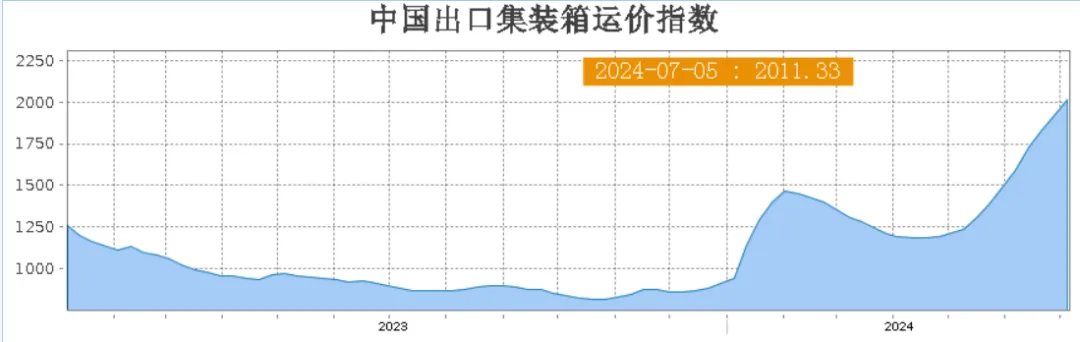
(Photo source: Shanghai Shipping Exchange)
At the same time, European routes also showed signs of decline. On July 5, the market freight rate (including ocean freight and ocean freight surcharge) from Shanghai Port to European base ports was US$4,857/TEU, down 0.5% from the previous period.
This shows that with the slowdown in the European economic recovery and the rise of trade protectionism, the market demand for European routes has begun to weaken.
However, North American transportation demand continued to remain high, and market freight rates continued to rise. The market freight rates for Shanghai Port exports to the West Coast and East Coast base ports of the United States increased by 3.5% and 7.2% respectively compared with the previous period.
This trend reflects the strong demand for imported goods in the North American market and the positive impact of the US economic recovery on the maritime transport market.
Looking back over the past few months, the Red Sea crisis has had a profound impact on the global shipping market. Ships have to detour to avoid conflict areas, which has disrupted the original shipping capacity balance and put global shipping capacity into a state of tension. As a result, a large number of transshipment ports have become congested, further exacerbating the contradiction between market supply and demand.
In addition, the move by Brazil and other countries to impose additional tariffs on China's new energy vehicles and photovoltaic products has also exacerbated the nervousness of shippers in shipping, driving up freight rates on the China-South America route.
Faced with the complex and ever-changing shipping market situation, freight forwarders and shippers need to pay close attention to the freight rate trends and market dynamics of each route. In particular, as the traditional shipping peak season approaches, the market supply and demand relationship may change further. Therefore, timely adjustment of transportation plans and optimization of route layout will become key measures for freight forwarders and shippers to cope with market changes.