
The imbalance between supply and demand in the shipping market has intensified, and freight rates continue to soar!
Date:2024-06-12 14:01:00 View:
As the imbalance between supply and demand in the shipping market further intensifies, container shortages and port congestion problems become increasingly prominent, and the freight rate index continues to rise.
The latest data showed that the Shanghai Containerized Freight Index (SCFI) rose 4.6% this week to a high of 3184.87 points after nine consecutive weeks of increases, although the increase has slowed compared with the past four weeks.
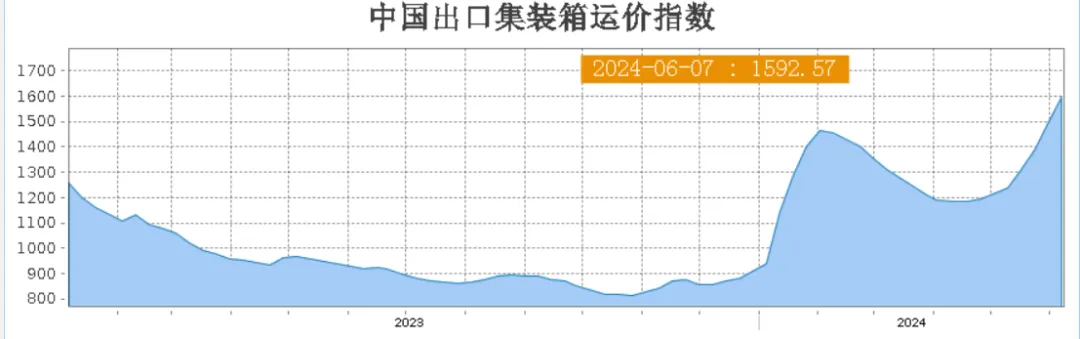
Image source: Shanghai Shipping Exchange (Delete if infringement)
This week, freight rates on the four major shipping routes all showed an upward trend.
The freight rate per TEU on the European route soared to US$3,949, a weekly increase of 5.58%.
The Mediterranean route followed closely behind, with the freight rate per TEU reaching US$4,784, an increase of 1.35%.
The freight rate per FEU on the US West Coast route increased slightly by US$41 to US$6,209, an increase of 0.66%.
The freight rate on the US East Coast route increased relatively significantly, with each FEU increasing by US$241 to US$7,447, an increase of 3.34%.
It is worth noting that the Southeast Asia (Singapore) route has attracted much attention due to port congestion, with its weekly increase reaching 14.63%.
The cargo collection company pointed out that the current freight level has reached a high level, with the freight rate per large container on the US West Coast line being about US$6,200-6,400, about US$7,200-7,500 on the US East Coast, and about US$6,300-6,500 on the European line.
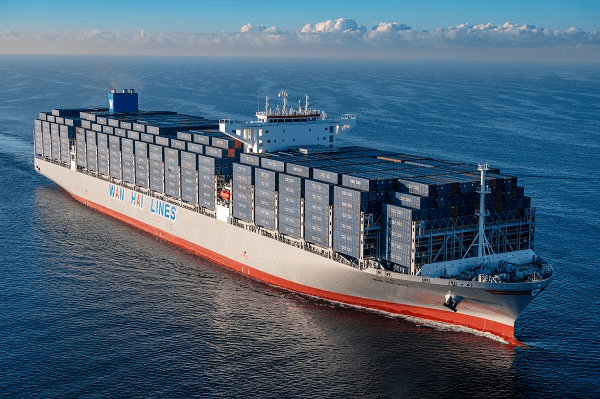
In order to ease the capacity shortage, shipping companies such as COSCO Shipping, Orient Overseas Container Line, HMM, Evergreen Marine and Wan Hai Lines have dispatched overtime ships, which is expected to help slow down the actual increase in freight rates in mid-June.
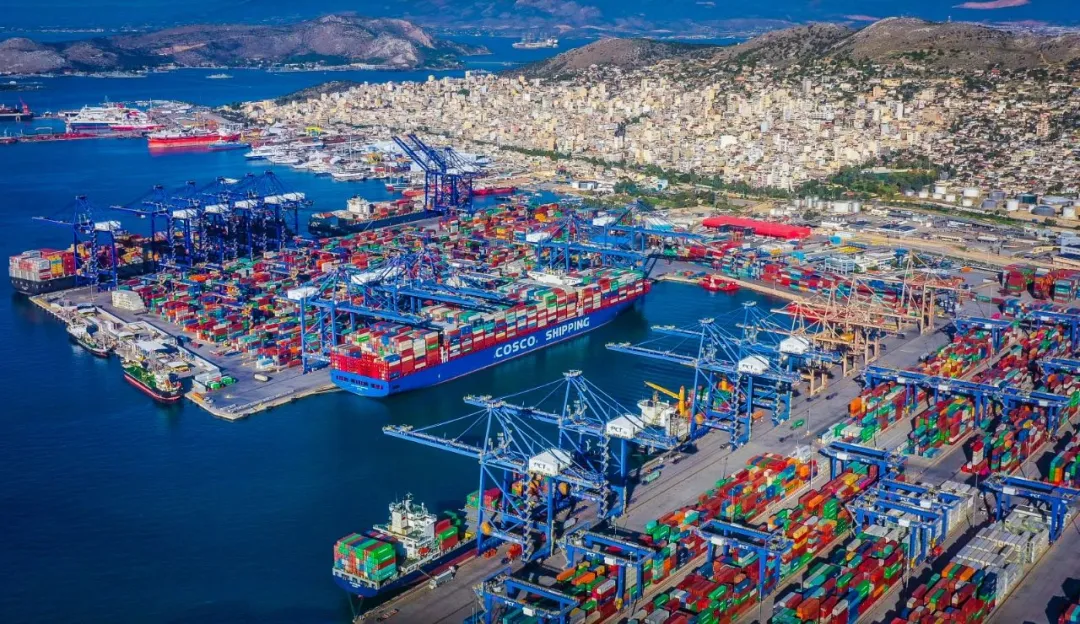
Industry insiders analyzed that although the increase in freight rates has converged this week, considering the lag of the freight rate index, freight rates are still expected to maintain the trend of increasing every half a month. At present, the problems of container shortage, cabin shortage and port congestion are serious, especially in Shanghai, China, where goods from early May are still piled up at the port waiting to be shipped.
The freight rate increase that began in late April was mainly driven by cargo demand.
According to statistics, cargo volume on routes from Asia to the United States in April and May increased by approximately 12% year-on-year, among which cargo volume on routes from mainland China to the United States increased by approximately 7% year-on-year.
This is related to the fact that many manufacturers have dispersed their production lines to Southeast Asia under the "plus 1" policy of mainland China. In particular, in May, the cargo volume on the Asia-US route increased by about 14% year-on-year.
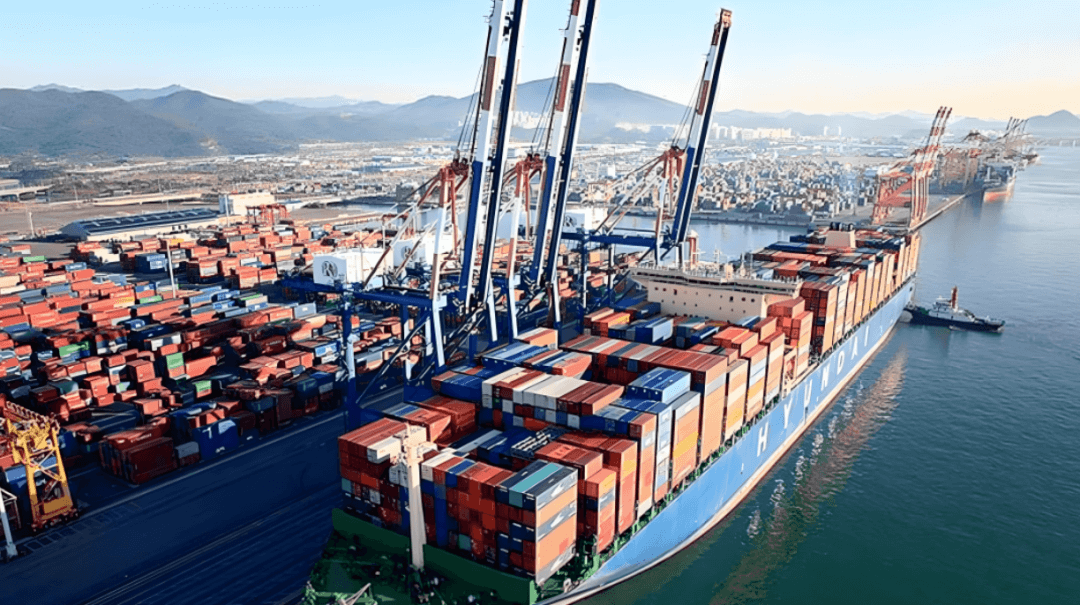
Containers and shipping space are extremely scarce in the current market. If customers book at spot prices, they may face the risk of not being able to obtain containers.
The port is severely congested, and shipping companies have no choice but to choose to jump ports, which leads to longer round-trip time for containers, further aggravating the container shortage problem and a significant drop in container turnover rate.
Looking ahead, shipping companies plan to increase prices by another $1,000 per 40-foot container on the Europe-U.S. route in mid-June. However, whether this price increase plan can be successfully implemented and how much it will increase will depend on the investment of new capacity and the configuration of shipping companies' ships.
Shipping companies are rushing to grab the high-freight-rate US routes, but whether future shipment strength can support freight rates remains unknown.