
The peak season has arrived early, and the battle for containers is fierce
Date:2024-05-29 14:00:00 View:
As Europe and the United States enter the inventory replenishment period in April and May, the demand for container transportation has increased significantly, resulting in congestion at some terminals.
In addition, in order to reduce the impact of rising freight rates, customers chose to ship in advance, bringing the peak season forward to May. Against the backdrop of tight shipping space, freight rates rose accordingly.

Taking the Shanghai Container Freight Index (SCFI) as an example, the average value in the first quarter of 2024 was 2010 points. Although it fell back to 1940 points before the May Day holiday, as shipments resumed after the holiday, the SCFI index rose to 2306 points on May 10, and jumped to 2703.43 points on the 24th, an increase of nearly 35% in just 20 days.
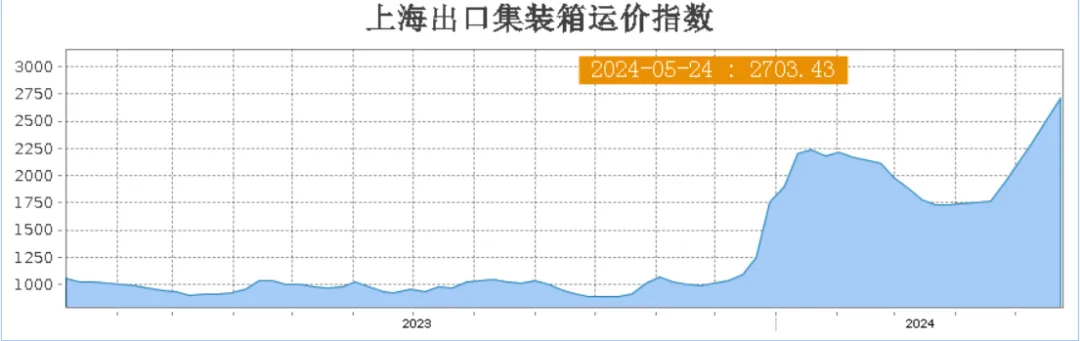
This year, the peak season of the European container shipping market has been brought forward from the traditional July to May. This is mainly because the Red Sea crisis caused ships to detour. As of May 14, the global idle capacity was only about 190,000 TEUs (20-foot standard containers), accounting for only 0.7% of the total fleet capacity.
"Container wars", pointing out that this is a shortage of equipment that has reappeared since the epidemic. Although previous reports have pointed out that large container manufacturers have no vacancies until August, container orders have increased since then. But against the backdrop of a shortage of ships, the container war has broken out, and orders for new containers have increased significantly.
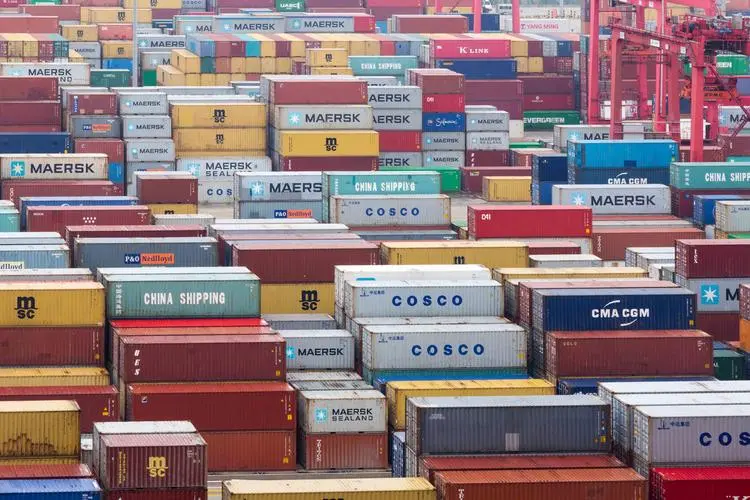
Currently, orders from major container manufacturers have been scheduled until November, which will help support freight rates in the third quarter.
Due to the tension in the Red Sea, European ships have been diverted, and shipping companies have been forced to deploy more capacity, which has led to a capacity gap on other routes, which in turn has driven up freight rates on these routes. Not only have freight rates on European and American routes increased, but freight rates on near-sea routes have also been affected.
The current supply of ships is very tight, and coupled with the impact of the Red Sea crisis on the supply chain, there is no short-term solution.
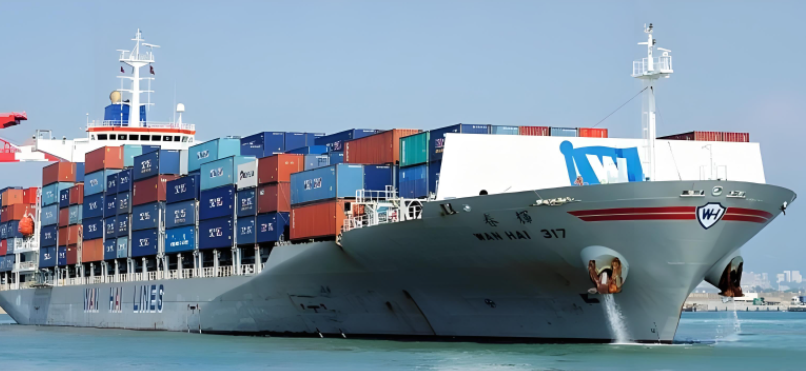
Currently, ships from Asia to the East Coast of the United States, Asia to Northern Europe and Asia to the Mediterranean are all sailing around the Cape of Good Hope.
Previously, a route from Asia to Europe required 12 ships to maintain regular service; now it requires 15.
This situation has spread to other routes. In addition to the sharp increase in freight rates on the four major routes, freight rates from Asia to Australia, New Zealand, West Africa, South Africa, South America and Southeast Asia have also been pushed up.